Brewed Scarce, Sold Out, Resold for Triple: Inside the Underground Economy of Limited Growler Drops
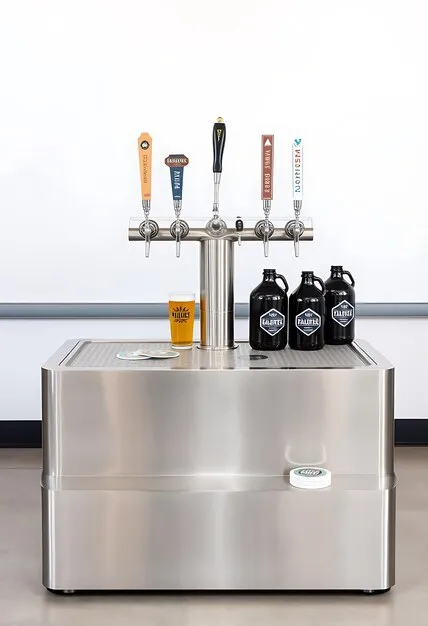
Photo: craft brewery limited edition growler release line waiting customers taproom, via img.freepik.com
There's a particular kind of Saturday morning energy outside certain taprooms across the country. People clutching thermoses of coffee, shuffling in line before the doors open, checking their phones every few minutes. It looks like a sneaker drop. It feels like a sneaker drop. Except what these folks are waiting for is a 64-ounce glass jug filled with a small-batch imperial stout aged in bourbon barrels from a distillery two towns over.
Welcome to the limited growler drop — one of the most quietly powerful marketing phenomena in American craft beer right now.
How It Started: Scarcity by Accident, Then by Design
Ask most brewery owners and they'll tell you the first time a fill sold out in under an hour, it caught them completely off guard. Marcus Delray, co-founder of Tallow Creek Brewing in Asheville, North Carolina, remembers it clearly.
"We had maybe thirty gallons of a wild-fermented peach saison we'd been sitting on for eight months," he says. "We put it on the board on a Thursday, mentioned it on Instagram, and by Saturday noon it was completely gone. People were texting us asking if we had more. We absolutely did not."
What followed surprised him even more. Within a week, he started seeing posts on regional beer trading boards — Reddit threads, Facebook groups, dedicated Discord servers — where people were offering to swap bottles of coveted commercial releases for a Tallow Creek growler fill. The beer had become currency.
That accidental scarcity planted a seed. Within six months, Tallow Creek had a deliberate release calendar built around limited fills, complete with announced drop windows, quantity caps, and a waitlist that now runs over two hundred names long.
The Math Behind the Magic
Here's what makes the growler drop model so attractive for smaller operations: the production costs are almost identical to a standard fill, but the perceived value skyrockets when availability is restricted. A brewery running thirty barrels a year doesn't have the volume to compete with regional giants on shelf space or distribution. But they can absolutely compete — and often win — on exclusivity.
Jenna Kowalczyk, who runs Ferment & Fold Brewing out of a converted auto shop in Milwaukee, has turned limited growler drops into the backbone of her taproom's revenue model. "We do six specialty drops a year," she explains. "Each one is tied to a specific ingredient or process — last spring it was a rye saison brewed with locally foraged juniper, before that a smoked märzen we made with a local butcher who does their own wood smoking. People aren't just buying beer. They're buying a story they can tell."
Her fills are capped at forty per release. They're gone within ninety minutes of the doors opening. And Kowalczyk has started noticing something she didn't anticipate: new faces in line each time. "People drive from Chicago, from Madison. We had a couple come from Minneapolis for the juniper one. That's not something I ever imagined when I was still doing this in my garage."
When the Secondary Market Takes Over
Not everyone who snags a limited fill intends to drink it. That's the part of this conversation that gets complicated fast.
On underground beer trading forums — and "underground" is relative here, since some of these communities have tens of thousands of members — coveted growler fills from small regional breweries regularly appear as trade bait or, in some cases, outright sale listings. A fill that cost $14 at the taproom might be listed for $75 to $90 by the time it hits a trading board, particularly if the brewery has a strong reputation or the recipe was genuinely one-of-a-kind.
This is a gray area that makes many brewery owners deeply uncomfortable, even as they acknowledge it's driving their notoriety. "I have mixed feelings," admits Delray. "On one hand, someone flipping our beer for profit feels like it's against the whole spirit of what we're doing. On the other, the fact that people want it that badly? That's not nothing. That tells you something real."
Kowalczyk takes a harder line. She's implemented a one-growler-per-person rule at her drops and has started quietly tracking repeat resellers. "This isn't a stock market. It's a neighborhood brewery. If you're scalping my beer, you're taking it out of the hands of the person who actually wanted to drink it with their friends on a Friday night. That's not what I'm here for."
Still, neither brewery has seen the secondary market slow down. If anything, the controversy seems to feed the mystique.
What Breweries Actually Gain
Beyond the obvious revenue bump, limited drops serve a function that's harder to quantify but arguably more valuable: they act as real-world recipe testing with built-in audience feedback.
When Ferment & Fold released a small batch of a cold-process oat cream IPA last fall — an experiment Kowalczyk wasn't sure about — the response from that limited release was so enthusiastically positive that she's now building it into her year-round rotation. "I could have done a survey. I could have offered samples. But nothing tells you if a beer works like selling forty growlers of it and watching people come back the next weekend asking when you're making it again."
It's a feedback loop that big production breweries simply can't replicate at scale. The intimacy of the growler — the fact that someone drove to your taproom, stood in your line, handed you money directly, and walked out with your beer in their hand — creates a connection that a canned six-pack on a grocery store shelf never will.
The FOMO Is the Point
Craft beer culture has always had a collector's streak running through it. Whale hunting — the pursuit of rare, highly rated beers — is practically a subculture of its own. Limited growler drops tap directly into that psychology, but with a local, accessible twist. You don't need to know a guy who knows a guy. You just need to show up.
That accessibility, paradoxically, is what makes missing out sting so much more. These aren't beers locked behind industry connections or thousand-dollar auction lots. They're thirty miles away, and you just didn't wake up early enough.
For breweries willing to play that game thoughtfully — keeping quantities honest, rotating recipes genuinely, and not manufacturing scarcity purely for profit — the limited growler drop has become one of the most effective tools in an independent brewery's arsenal. It builds loyalty, generates word-of-mouth that no ad spend can replicate, and turns a simple glass jug into something people talk about for months.
Not bad for a vessel that's been around since before Prohibition.
Have you scored a limited growler drop — or missed one you're still bitter about? Tell us about it in the comments or tag us on social with your most prized fill.