Heavy, Thin, or Just Right: What Your Growler's Glass Actually Says About the Beer Inside

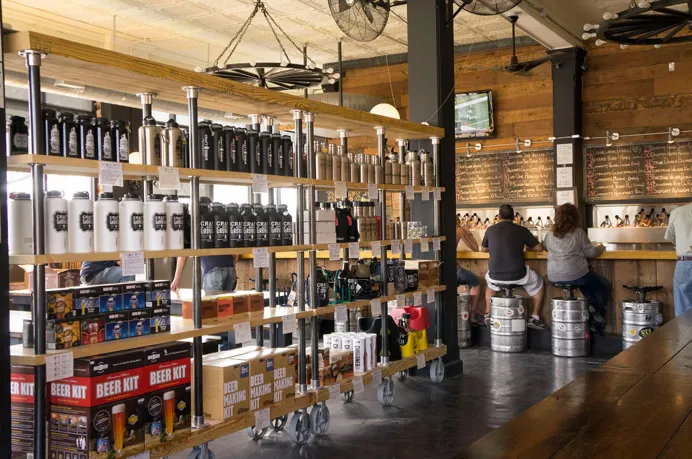
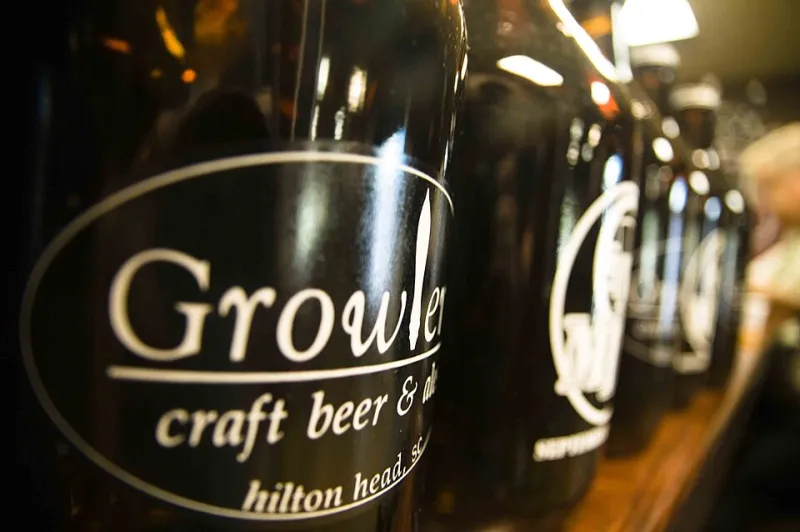
Photo: TheDigitel Beaufort from Beaufort, SC, USA, CC BY 2.0, via Wikimedia Commons
You've probably got at least one sitting on a shelf right now. Maybe a few. Some are thick and satisfying to hold, the kind that feel like they could survive a tailgate with minimal supervision. Others are lighter, almost delicate, the kind you treat with the same caution you'd give a wine glass at a crowded house party. But here's the thing most people never stop to ask: why are they so different, and does any of it actually matter for the beer inside?
Short answer? Absolutely yes. Long answer? Pull up a stool.
The Wall Thickness Question Nobody Asks at the Taproom
When breweries source their growlers, they're navigating a surprisingly nuanced market. Glass thickness isn't just about durability — though that's a big part of it. Thicker walls retain temperature more effectively, which matters enormously if you're driving more than twenty minutes from the taproom. A fill that starts cold and stays cold is a fundamentally different drinking experience than one that's crept up a few degrees by the time you crack it open.
Industry standard for a quality 64-ounce growler typically runs somewhere between 3mm and 5mm wall thickness. Below 3mm and you're in fragile territory — beautiful on a shelf, nerve-wracking in a bag. Above 5mm and you're adding significant weight, which brings its own tradeoffs.
Jeremy Callahan, head brewer at a small production brewery in Asheville, North Carolina, put it plainly when we talked to him last spring: "We went through three different suppliers before we landed on our current growler. The first two were gorgeous but thin. We had too many cracking during fills because of thermal shock. The glass just couldn't handle the temperature differential between room temp and a cold draft line."
Thermal shock is a real issue that doesn't get enough airtime. When cold beer hits warm glass too fast, stress fractures can develop — sometimes invisible at first, sometimes catastrophic right at the fill station. Thicker, higher-quality glass handles that transition more gracefully.
Glass Composition: It's Not All the Same Sand
Here's where things get genuinely interesting. Not all glass is created equal, and the composition of the material itself affects everything from clarity to strength to how well it holds up over time.
Standard soda-lime glass — the most common and affordable — does the job for most applications. It's what you'll find in the majority of budget growlers. Borosilicate glass, the same stuff used in laboratory equipment and quality bakeware, offers superior thermal resistance and is less prone to stress fracturing. It's also more expensive, which is why you don't see it everywhere.
Some premium growlers on the market are made with what manufacturers call "extra-white" or "flint" glass — an ultra-clear formulation that minimizes the greenish tint common in standard glass. For visual presentation at the taproom, this matters. For your beer's actual integrity, less so. But if a brewery has invested in flint glass, it's usually a signal that they've thought carefully about the whole package.
Lindsay Park, taproom manager at a craft operation outside Portland, Oregon, told us their brewery made the switch to a borosilicate-heavy blend two years ago after noticing higher return rates on damaged vessels. "The upfront cost was real," she said, "but our regulars are keeping their growlers longer, and that's free advertising every time someone pulls one out at a party."
Handle Design: Underrated, Overdue for Appreciation
The handle on a growler is one of those details that seems minor until you're hauling a full 64-ounce fill — roughly five pounds of glass and liquid — across a festival parking lot. Handle design directly affects grip security, pour control, and honestly, whether you'll ever actually use the thing for its intended purpose or just let it collect dust.
Loop handles, the classic jug-style ring attached to the neck, remain the most common design. They're functional, easy to manufacture, and familiar. But their weakness is leverage — a full growler on a loop handle puts significant strain on your wrist at certain pour angles.
Some newer designs have moved toward a more substantial strap handle that runs parallel to the body, offering better balance during a pour. A handful of boutique growler manufacturers have experimented with ergonomic thumb-groove designs, though these remain niche.
What to actually look for: the attachment point where the handle meets the bottle body. This is the stress concentration zone. On cheaper growlers, this joint is thin and prone to cracking if the bottle takes an impact. On better-built vessels, you'll notice a thicker glass mass at those contact points — subtle, but worth running your fingers over before you commit.
Why Your Brewery's Choice Reveals Their Values
Here's the editorial take that ties this all together: the growler a brewery chooses is a surprisingly honest expression of how they think about their customer's experience beyond the taproom.
A brewery that invests in thicker glass, quality closures, and thoughtful handle design is communicating that they care about what happens to their beer after it leaves the tap. They're thinking about the twenty-minute drive, the backyard barbecue, the friend's house where it gets poured into pint glasses. They're thinking about you.
A brewery that opts for the thinnest, lightest, cheapest vessel available might be making a reasonable economic decision — margins in craft brewing are brutal, full stop — but they're also implicitly saying that the fill experience ends at the taproom counter.
Neither is a moral failing. But as a consumer who's investing real money in a fill (and potentially in the growler itself), it's worth knowing what you're getting.
What to Actually Check Before You Buy
Next time you're at a taproom considering a growler purchase, here's a quick field checklist:
Hold it empty and feel the weight. A quality 64oz growler should feel substantial — somewhere in the 1.5 to 2 pound range empty. Noticeably lighter than that and you're likely looking at thinner glass.
Look at the base. Flip it over carefully. The bottom of the growler should have visible thickness — a good indicator of overall glass quality and stability.
Inspect the handle joint. Run your thumb along where the handle meets the bottle. You want mass there, not a thin seam.
Check the lip and neck. The opening should be smooth and even. Rough or uneven lips can compromise how well your closure seals, which directly affects carbonation retention.
Ask the staff. Seriously. A taproom that can't tell you anything about their growler supplier probably hasn't thought too hard about it. A staff member who lights up and tells you about the thermal testing they did? That's a brewery worth your loyalty.
The Bottom Line
Growler culture is about more than just filling a vessel and heading home. It's about extending the taproom experience, carrying a little piece of a brewery's identity with you, and sharing something genuinely made with care. The glass that contains your beer is part of that story.
Not every fill warrants a premium vessel, and not every brewery can afford to prioritize growler quality above all else. But knowing what to look for puts you in the driver's seat — and makes you a smarter, more engaged participant in the craft beer world you're already investing time and money in.
Fill up wisely. The glass matters more than you think.