Why Your Growler Lied to You: The Science Behind Flat, Foamy, and Off-Tasting Fills
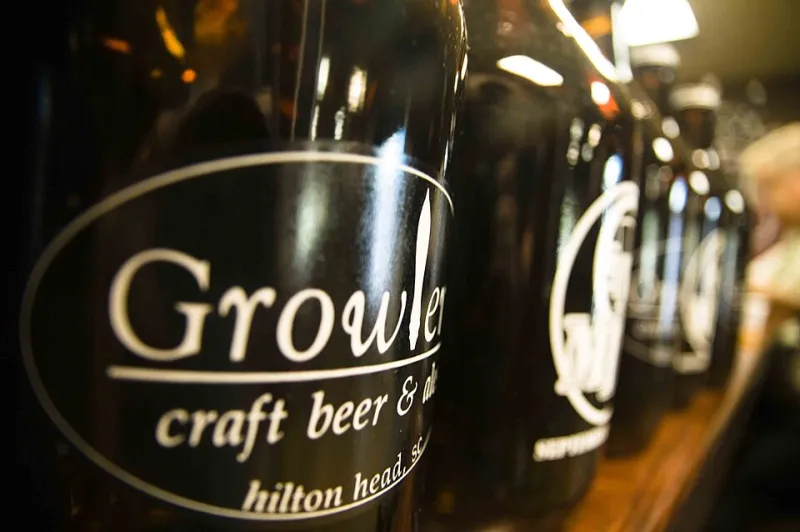
Photo: TheDigitel Beaufort from Beaufort, SC, USA, CC BY 2.0, via Wikimedia Commons
Let's set the scene. You've just driven home from your favorite taproom with a freshly filled growler riding shotgun, wrapped in a hoodie because you forgot to bring a cooler bag. You pour it carefully into a pint glass, hold it up to the light — and it looks off. The head is wrong. The carbonation is either aggressive and foamy or suspiciously flat. The flavor is close, but something's missing. It doesn't taste like the pint you had at the bar.
You didn't imagine the difference. And it probably wasn't the brewery's fault either. What happened in that container between the tap and your kitchen is a small physics lesson, and understanding it will genuinely change how you transport and pour your fills.
It Starts at the Valve: What's Actually Happening During a Fill
A good growler fill isn't just a bartender pointing a tap at your jug. At better taprooms, the process involves a counter-pressure filling setup — essentially, the growler gets pre-purged with CO2 before the beer enters, which displaces the oxygen inside the vessel and gives the incoming beer a pressurized environment to flow into without agitation.
When this is done correctly, the beer travels from the keg line into your growler with minimal turbulence, the dissolved CO2 stays in solution, and you end up with a fill that mirrors the keg's carbonation level almost exactly. The difference between a good counter-pressure fill and a sloppy bottom-up fill (where beer just pours in from the tap line without purging) can mean the difference between 18 hours of fresh, carbonated beer and a container that goes flat before you even get home.
Here's the catch: not every taproom invests in counter-pressure equipment. Some use a simple tube attachment that fills from the bottom, which is better than top-pouring but still introduces more agitation than a true counter-pressure system. A few places still fill from the top entirely. The method matters enormously, and it's completely reasonable to ask your bartender how they fill before committing to a 64-ounce purchase.
Temperature: The Variable You're Probably Underestimating
CO2 solubility in beer is directly tied to temperature. Cold liquid holds more dissolved gas than warm liquid — it's the same principle that makes a warm soda go flat faster than a cold one. For beer, the relationship is steep enough that even a modest temperature shift can measurably affect carbonation levels.
When your growler warms up in a hot car, the dissolved CO2 in the beer starts coming out of solution. It has nowhere to go except into the headspace at the top of the container. Pressure builds inside the vessel, which is why a warm growler often hisses when you open it — and why the first pour is frequently a foam disaster. The gas that should be in your beer is now sitting above it, and when you release the seal, it rushes out and takes a lot of beer with it.
The fix sounds obvious but bears repeating: temperature control from tap to table is not optional if you care about quality. A proper insulated growler bag, a small cooler with a single ice pack, or even a shaded trunk in mild weather makes a real difference. The goal is keeping your fill as close to serving temperature (typically 38–42°F for most American craft styles) as possible throughout transit.
On the flip side, a fill that gets too cold — say, buried under ice for hours — can also mute flavors and aromas temporarily. Most beers express themselves best in a narrow temperature window, and the carbonation perception shifts noticeably as you move outside it. That hoppy IPA you love at 40°F will taste like a different beer at 55°F or 32°F.
Altitude: The Factor That Catches Travelers Off Guard
If you've ever picked up a growler at a high-elevation taproom and driven down to lower elevation (or vice versa), you may have noticed something strange when you opened it. This isn't your imagination.
Atmospheric pressure decreases as you gain elevation. CO2 in solution behaves according to Henry's Law — the amount of gas that stays dissolved in a liquid is proportional to the partial pressure of that gas above the liquid. At sea level, the atmospheric pressure helps keep CO2 in your beer. At 5,000 feet, that external pressure is lower, which means CO2 more readily escapes from solution.
For Colorado craft beer fans especially, this is a genuine and ongoing variable. A growler filled at a Denver taproom sitting at 5,280 feet and transported to a friend's house in the mountains at 9,000 feet will behave differently than that same fill brought down to a tailgate in Colorado Springs. The beer isn't defective. Physics just happened to it.
The practical implication: if you're regularly filling growlers at high-altitude breweries and drinking them at lower elevations, expect slightly higher carbonation perception at the point of consumption. If you're going the other direction — sea-level fill, mountain consumption — you may find your beer pours a bit flatter than expected. Neither situation is a crisis, but knowing the cause helps you adjust expectations and pouring technique.
Headspace, Oxidation, and the Clock
Even a perfectly filled, properly sealed, correctly transported growler has a shelf life. And that shelf life is largely determined by two things: how much oxygen got into the vessel during the fill, and how much headspace exists above the beer.
Oxygen is the enemy of fresh beer. It reacts with hop compounds and malt proteins in ways that accelerate staling, producing cardboard-like or papery flavors that are the hallmark of an oxidized fill. A counter-pressure fill with a proper CO2 purge minimizes oxygen contact. A sloppy fill that lets the beer splash around introduces significantly more. The difference can be measurable within 24 hours.
Headspace matters because more air above the beer means more opportunity for oxidation over time. A completely full growler with minimal headspace will stay fresher longer than one that's three-quarters full. If you're not planning to finish a fill in one sitting, consider that a partially consumed growler will degrade noticeably faster than an untouched one.
For most styles, a well-filled growler is best consumed within 24–36 hours. Hoppy beers are the most unforgiving — the volatile aromatic compounds that make an IPA smell incredible are also the first things to degrade. Malt-forward styles like stouts and porters tend to hold up a bit longer. Sour and wild ales, interestingly, are often more stable because their acidity creates a less hospitable environment for oxidation.
Getting the Most Out of Every Fill
None of this is meant to make growler culture feel like a chemistry exam. The point is that understanding what's happening inside that vessel gives you real tools to improve your experience.
Ask about the fill method before you buy. Request a counter-pressure fill if the taproom offers it. Bring an insulated bag every single time — no exceptions. Drink hoppy fills the same day if you can. Store your growler upright in the coldest part of your refrigerator, not in the door where temperature fluctuates. And when you pour, tilt the glass and go slow, just like you would from a tap.
The beer in that growler is the same liquid that came out of the keg. It just needs a little help getting to your glass in one piece.