It Tastes Better When They Pour It: The Strange Science of the Growler Fill Ritual
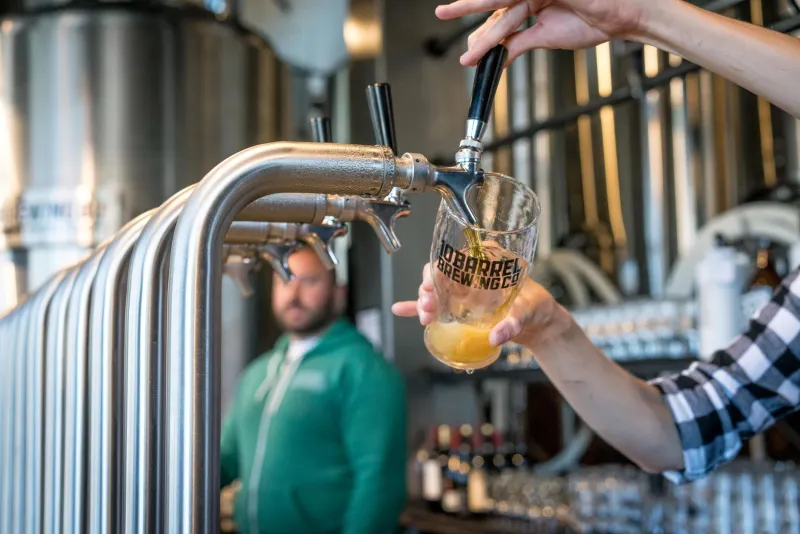
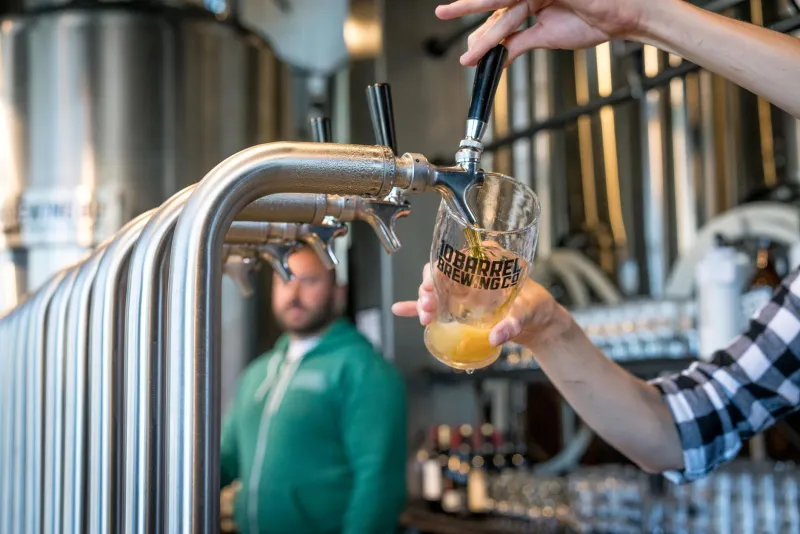
You've done it before. You've cracked open a growler you filled yourself at home — maybe from a party tap, maybe a homebrew batch — and thought, it's fine. Then you've driven twenty minutes to your favorite local taproom, handed over your jug, watched the bartender purge the vessel with CO2, angle the fill just right, and seal it with that satisfying click. You get home, pour a glass, and somehow — somehow — it tastes better.
Same recipe. Same style. Different experience entirely.
This isn't a coincidence, and it's not just beer snobbery. It's neuroscience, psychology, and a little bit of cultural theater all working together to convince your brain that what's in that glass is extraordinary. And honestly? It kind of is.
The Placebo Effect Has a Foam Head
Let's start with the uncomfortable truth: your brain is easily fooled, and it doesn't apologize for it.
Researchers at CalTech and Stanford published a now-famous study showing that people consistently rated the same wine as tasting better when told it was more expensive. The wine didn't change. The price tag did. And the brain's reward centers — specifically the medial orbitofrontal cortex — lit up more intensely when subjects believed they were drinking something of higher value.
Apply that same framework to a taproom fill, and the math gets interesting. When a knowledgeable brewer fills your growler, you're receiving a cascade of quality signals: the expertise of the person behind the tap, the environment of the brewery itself, the ritual of the fill process, and the social context of being part of a community that takes beer seriously. Every one of those signals is telling your brain: this is worth something.
"Expectation is basically a pre-load on your sensory experience," says Dr. Rachel Morrow, a sensory neuroscientist based in Portland, Oregon, who has consulted informally with several Pacific Northwest craft breweries. "By the time the beer hits your tongue, your brain has already started writing the review."
The Ceremony Isn't Theater — It's Craft
Ask any experienced taproom bartender and they'll tell you: filling a growler well is a skill. It's not performative. There's a real technique involved — CO2 purging to displace oxygen, the precise angle of the fill to minimize foaming and oxidation, the timing of the seal. Done correctly, a proper taproom fill genuinely extends the freshness window of your beer and preserves carbonation better than a rushed or amateur fill.
So part of what you're tasting when you get a great taproom fill is the result of actual expertise. The ritual isn't just ceremony — it's quality control in motion.
Josh Tanner, head brewer at a small craft operation in Asheville, North Carolina, puts it plainly: "I've seen people fill growlers carelessly and then wonder why the beer tastes flat by the time they get home. When we fill here, we treat it like the last step in the brewing process. Because it is."
That framing matters. The fill isn't packaging. It's the final act of craft. And when you witness that final act performed with intention, you're not just receiving a product — you're receiving a story about how seriously someone takes their work.
Expertise as Flavor Enhancer
There's a concept in psychology called "source credibility," and it does wild things to our perception. When we believe the person delivering an experience is genuinely skilled, we rate the experience higher — even when we can't objectively measure the difference.
In a craft beer context, this plays out constantly. The brewer who fills your growler while explaining the grain bill, the hop addition timing, or why this particular IPA needed an extra week of conditioning is doing something more than making conversation. They're encoding that information into your sensory experience. When you pour that beer at home, you're not just tasting hops and malt — you're tasting the context.
"People remember stories through sensory anchors," Dr. Morrow explains. "If someone told you something meaningful while you were drinking a beer, that beer will taste better in memory and even in subsequent pours. The narrative becomes part of the flavor profile."
This is why taprooms that invest in staff education and genuine hospitality — places where the person filling your growler can actually talk about the beer — aren't just offering better service. They're offering a better product, neurologically speaking.
The Community Variable
Craft beer culture in America has always been about more than what's in the glass. It's about belonging to something. The local brewery isn't just a place to buy beer — it's a third space, a gathering point, a community institution. And that social dimension has a measurable effect on how we perceive what we drink there.
Research on communal eating and drinking consistently shows that food and beverages consumed in social settings, or associated with meaningful communities, are rated as more enjoyable than the same items consumed in isolation. The shared identity of being a craft beer person — someone who fills a growler, who knows their local brewer by name, who cares where their beer comes from — adds a layer of meaning that translates directly into perceived quality.
When you fill your growler at your neighborhood brewery, you're not just filling a container. You're renewing a membership. And that membership has taste.
What This Means for Your Next Fill
None of this is an argument that home fills or self-service options are inferior by definition. There are plenty of well-engineered counter-pressure fill systems and home kegerators that produce technically excellent results. The beer itself can be identical.
But if you've ever wondered why the same six-pack from the grocery store doesn't quite hit the way a fresh taproom fill does, the answer isn't entirely in the can. It's in the context, the ceremony, and the community that surrounds the pour.
Your brain is assigning value to the experience — the drive over, the conversation at the bar, the sound of the seal clicking into place, the brewer's quick nod as they hand it back. And that assigned value? It's real. It shows up in your sensory perception. It shows up in your enjoyment. It shows up in the fact that you'll drive back next weekend and do it again.
The growler fill ritual isn't a quirk of craft beer culture. It's one of its most quietly powerful features — a reminder that how we receive something shapes how we experience it. Fill up thoughtfully. Drink local. And maybe let someone who really knows what they're doing pour the next one.