Built to Come Back: How Breweries Are Engineering Growlers That Drinkers Actually Return
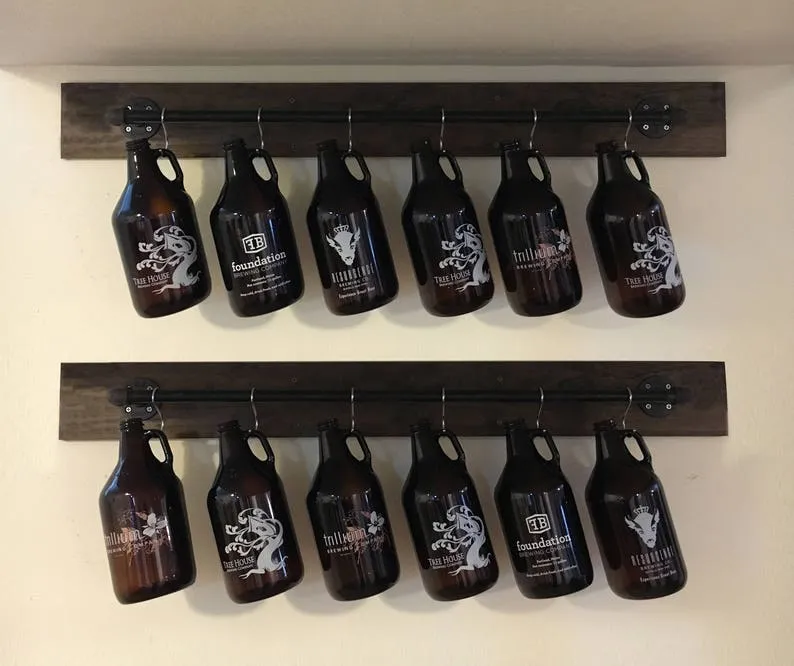
Walk into the right craft brewery taproom and you'll spot them immediately — rows of branded growlers lining the shelves behind the bar, each one a minor piece of local art. Screen-printed logos, hand-applied wax seals, embossed glass that catches the light just right. They're beautiful. They're also, from a brewery's perspective, a slow financial hemorrhage.
Because here's the thing: most of those gorgeous vessels never come back.
Breweries across the US have been grappling with what some in the industry half-jokingly call the "growler graveyard" problem — the steady accumulation of branded vessels sitting in customers' garages, on display shelves, or buried in kitchen cabinets. Every unreturned growler is a vessel the brewery has to replace, and at anywhere from $8 to $25 a unit depending on materials and customization, those losses add up faster than a slow pour on a busy Saturday.
So what are they doing about it? Quite a lot, it turns out — and the solutions range from clever to counterintuitive.
The Economics of a Missing Jug
To understand why breweries are redesigning their vessels in the first place, you have to understand the math. A mid-sized taproom might fill 200 to 400 growlers on a busy weekend. Even if only 20 percent of those never return — a conservative estimate, according to several brewery owners we spoke with — that's a meaningful chunk of inventory walking out the door permanently every single month.
"We did an audit about two years ago and realized we were reordering growler stock three times more often than we should have been," says the operations manager at a Colorado Front Range brewery who asked not to be named. "People weren't being malicious about it. They just... kept them. And honestly, we'd made them too nice to give back."
That last point is the crux of the problem. In the early days of the craft beer boom, breweries competed hard on vessel aesthetics. A beautiful growler was a walking billboard, a conversation starter, a piece of local identity. The more distinctive the design, the more brand recognition it generated. The trouble is that the same qualities that made a growler a great marketing tool also made it a compelling collectible.
Designing for Return, Not the Shelf
The response from forward-thinking breweries has been a deliberate pivot in design philosophy. Rather than creating vessels customers want to keep, some operations are now quietly engineering growlers that are more functional than fetishistic — durable enough to handle repeated use, but stripped of the decorative details that make them display-worthy.
Simpler silkscreen graphics instead of multi-color embossed designs. Standardized shapes that don't stand out in a lineup. Muted color palettes that feel utilitarian rather than artistic. The goal, counterintuitively, is to make the growler feel like a tool rather than a trophy.
"We went from a really elaborate label design to something much more stripped down," explains the marketing director at a Pacific Northwest brewery that recently overhauled its vessel program. "Sales didn't drop. Fills actually went up slightly because we lowered the deposit price. And return rates improved noticeably within the first quarter."
Other breweries are experimenting with material shifts — moving away from the thick, weighty glass that collectors prize toward lighter, more industrial-feeling vessels. Some have introduced aluminum growlers specifically because they feel less precious, less like something you'd want sitting on a bookshelf.
The Deposit Dilemma
Deposit systems have long been the industry's go-to solution for the return problem, but they come with their own complications. Set the deposit too low and customers shrug it off as the cost of a nice souvenir. Set it too high and you risk alienating casual buyers who just want a fill to go.
A handful of breweries are experimenting with tiered deposit structures — lower deposits on plainer, more utilitarian vessels, higher deposits on limited-edition or seasonal designs. The logic is that the fancy stuff can carry a premium that reflects its collectible nature, while the everyday workhorse growler stays affordable and returnable.
"We basically split our program into two tracks," says a brewery owner in the Midwest who's been running this model for about eighteen months. "There's our standard vessel — low deposit, plain design, we want it back every time. And then we do two or three special releases a year that are genuinely meant to be keepers. We price those accordingly and lean into the collectible angle intentionally. It's helped us stop losing money on the ones that were never supposed to be collector's items."
When Anti-Collectible Becomes the New Collectible
Here's where things get a little ironic. Some of the breweries that have most aggressively redesigned their growlers for maximum returnability have inadvertently created a new kind of desirability. Minimalist designs, it turns out, have their own aesthetic appeal. And vessels that feel deliberately understated can read as sophisticated to a certain kind of craft beer drinker.
"We tried to make it boring and people started asking if they could buy extras," laughs the Colorado operations manager. "There's no winning sometimes."
The collector community — and it is a genuine, organized community — has noticed these design shifts and adapted accordingly. Online forums dedicated to brewery vessel collecting have threads specifically discussing "transition era" growlers from breweries that changed their design language. The plain ones from before the redesign? Already fetching premiums in secondary markets.
It's a reminder that the relationship between breweries and their most dedicated fans is complicated. The same customers who make craft culture vibrant are also the ones most likely to squirrel away every vessel that catches their eye.
What Actually Works
Talking to brewery owners and operations staff across the country, a few strategies consistently come up as genuinely effective at improving return rates without sacrificing brand identity.
Loyalty incentives tied specifically to returns — discounts on fills, points toward merchandise, priority access to limited releases — seem to resonate with regular customers who already feel connected to the brewery. Making the return feel rewarding rather than obligatory changes the psychology around it.
Clear communication about the environmental cost of unreturned vessels has gained traction with sustainability-minded drinkers, particularly in markets where eco-consciousness is part of the local identity. Framing the return as a green act rather than a financial transaction reframes the whole dynamic.
Simplified designs with strong brand elements — a single color, a clean logo, quality materials without ornate detailing — seem to hit a sweet spot between attractive and returnable. Customers appreciate the quality without feeling like they're taking home a museum piece.
And sometimes, the most effective solution is the most direct one: just asking. A few breweries have reported meaningful upticks in returns simply by training staff to mention it at the point of sale, not as a demand, but as a genuine request. "Hey, we'd love to see that one come back" apparently goes further than most people expect.
The Bigger Picture
The growler return problem is, at its heart, a symptom of how successfully craft breweries have built emotional connections with their customers. People keep these vessels because they mean something — because that brewery represents a neighborhood, a memory, a community. That's not a bad problem to have.
But it is a problem, and the breweries navigating it most successfully are the ones finding ways to honor that emotional connection while gently steering it toward behavior that keeps the whole ecosystem running. Design is just one lever in a larger conversation about what craft beer culture values and how those values translate into everyday habits.
The best growler, it turns out, might not be the one you most want to keep. It might be the one you're happiest to bring back.