Poured With Love: The Craft Beer Enthusiasts Turning Growlers Into Family Heirlooms
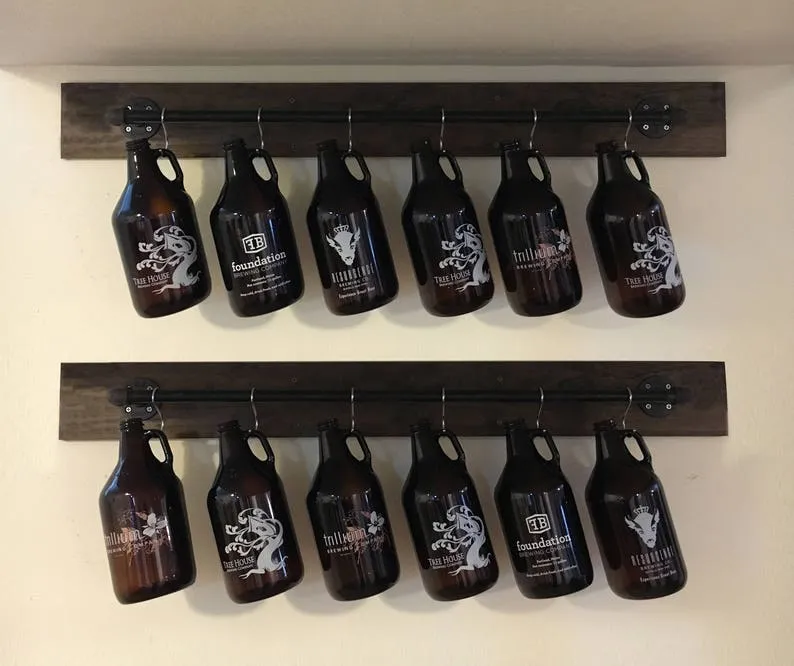
Photo: vintage ceramic growler on wooden shelf with family photos heirloom, via i.etsystatic.com
Somewhere in a Denver apartment, a 64-ounce ceramic growler from a brewery that closed in 2014 sits on a bookshelf between a framed photo and a dog-eared copy of On the Road. It hasn't held beer in years. It probably never will again. And its owner, a 34-year-old named Marcus, wouldn't trade it for anything.
"My dad and I drove six hours to visit that brewery the summer before he got sick," he says. "We filled that thing twice. We sat outside and talked for four hours about nothing and everything. When he passed, I couldn't bring myself to use it for anything else. It just became... his."
Marcus isn't alone. Across the US, a quiet but deeply felt shift is happening inside the craft beer community. Growlers — those humble, refillable vessels that built the modern local brewery economy — are increasingly being treated not as functional containers but as emotional artifacts. Keepsakes. Heirlooms. Objects that carry the weight of a memory far heavier than the beer they once held.
More Than a Fill, More Than a Flask
The practical case for a growler has always been simple: fresh beer, portable, refillable, local. But the emotional case is something breweries are only now beginning to fully reckon with.
Amanda Kowalski, who co-owns a small taproom in Asheville, North Carolina, says she started noticing the shift when customers began asking unusual questions. Not about ABV or hop profiles — about provenance.
"People would come in and say, 'I have one of your original growlers from when you opened in 2011. Do you still fill those?'" she recalls. "And you could hear it in their voice. They weren't just asking about the beer. They were asking us to participate in something that mattered to them."
Kowalski's brewery now keeps a logbook — an actual handwritten ledger — of notable growler stories customers have shared over the years. First dates that became marriages. Road trips taken before a deployment. The last fill before a friend moved across the country. The book has three volumes.
The Anatomy of a Meaningful Object
What makes a growler heirloom-worthy? According to the people who treat them that way, it's rarely about the glass itself.
Take Renee Simmons from Portland, Oregon, who inherited a swing-top growler from a brewery in Vermont that her mother visited on a solo cross-country drive in 2009. The brewery is still open. The growler is slightly chipped at the base. Renee has never been to Vermont.
"My mom gave it to me with a note that said, 'This is what brave feels like,'" Renee explains. "She was going through a divorce. She drove alone for three weeks. She filled this at some little brewery in Burlington and said it was the first time she'd felt like herself in years. I keep it on my kitchen counter. It's the most meaningful thing I own."
That kind of resonance — the way a physical object absorbs the emotional texture of a moment — is exactly what cultural anthropologists have long observed in heirlooms of all kinds. A growler, it turns out, checks every box: it's tactile, durable, unique to a specific place and time, and tied to a ritual (the fill, the pour, the shared drink) that humans have practiced for millennia.
Breweries Starting to Take Notice
Some craft breweries are beginning to lean into this phenomenon intentionally, designing growlers with longevity — and legacy — in mind.
A brewery in Bend, Oregon recently launched a "Founding Fill" program, issuing numbered ceramic growlers to their first 200 customers on opening day. Each one came with a certificate of authenticity and a handwritten note from the head brewer. They sold out in under two hours. Several have already shown up on local Facebook groups — not for resale, but with owners asking whether the brewery would be willing to document the vessel's history for posterity.
"We didn't expect that reaction," admits the brewery's founder. "We thought people would just think it was a cool collector's item. But people started treating them like something to be protected. One guy told us he was putting his in his will."
Other breweries are taking a more organic approach, simply acknowledging the stories customers bring in. A taproom in Chicago keeps a corkboard near the bar where regulars can pin photos of their growlers in the wild — at campsites, at family reunions, on fishing boats. The board has become one of the most photographed spots in the building.
Passing the Growler Down
For some families, the tradition is already multi-generational.
Tom and Linda Ashcraft from Knoxville, Tennessee, have been collecting regional brewery growlers since the mid-2000s, back when craft beer was still finding its footing in the South. They have over 40 vessels displayed across two shelves in their living room, each tagged with a handwritten card noting the brewery, the date, and what they were celebrating — or just doing — when they filled it.
"Our daughter thinks we're eccentric," Linda says with a laugh. "But she's also already claimed the one from our 25th anniversary trip to Asheville. She says it's going on her shelf the day we're gone."
Tom adds: "It's not about the beer anymore. It's about what the beer meant. Where we were. Who we were with. The growler is just the thing that holds all of that together."
That sentiment — the growler as container not just of liquid but of lived experience — might be the most honest thing anyone has ever said about what these vessels have always quietly been.
A New Kind of Collectible
The heirloom growler trend sits at an interesting crossroads of craft beer culture, nostalgia, and the broader American appetite for objects that feel real in an increasingly digital world. Unlike a photo on your phone or a check-in on Untappd, a growler takes up physical space. You can hold it. You can feel the weight of it. You can hand it to someone and watch their face.
For breweries, this represents something genuinely valuable: the possibility that their glassware outlives their beer, outlives their taproom, maybe even outlives them. That's not just good branding. That's legacy.
And for the rest of us — the ones hauling growlers back from road trips, filling them at our local spot after a hard week, pressing them into the hands of friends moving away — it's worth pausing to consider what we're actually doing.
We're not just carrying beer home. We're carrying something worth keeping.
Do you have a growler with a story behind it? Tell us about it — we're always looking to feature the vessels and the people behind them.