Fill It Again: Why Forward-Thinking Breweries Are Betting Big on the Refillable Revolution
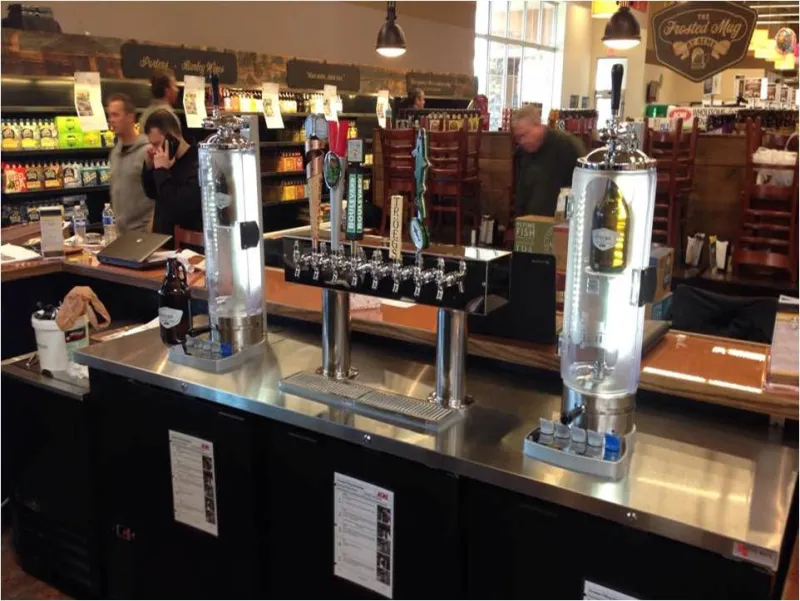
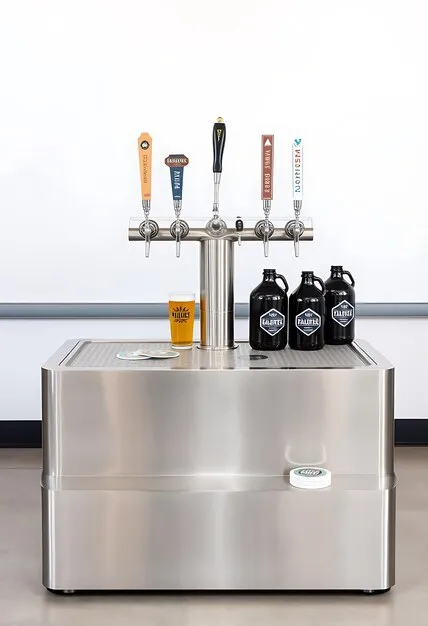
Photo: craft brewery growler refill station sustainable reusable containers taproom, via static.wixstatic.com
Somewhere between your third pint and the moment you toss an empty can into the recycling bin, a quiet question is starting to nag at a lot of craft beer drinkers: Is this actually sustainable?
Recycling feels good. It looks responsible. But the uncomfortable truth is that aluminum cans — despite being technically recyclable — carry a significant environmental cost from the moment bauxite gets pulled out of the ground to the moment that crushed cylinder lands in a sorting facility. And bottles aren't much better. The craft beer industry, for all its artisanal charm, generates a staggering volume of single-use packaging every single year.
That's exactly why a growing number of breweries across the country are leaning hard into something that's been sitting right under our noses the whole time: the growler.
The Carbon Math Nobody Wants to Do
Let's start with the numbers, because they're genuinely eye-opening.
A standard aluminum can requires roughly 170 watt-hours of energy to produce. Glass bottles aren't far behind. When you factor in transportation, refrigeration logistics, and the actual recycling process — which, depending on your municipality, may or may not result in the material actually being reused — the footprint of single-use formats starts looking a lot less green.
A 64-ounce stainless steel growler, by contrast, can be refilled hundreds of times before it reaches the end of its useful life. Studies from packaging lifecycle analysts suggest that a reusable container breaks even on its production carbon cost somewhere between 15 and 20 uses. After that, every fill is a net environmental win compared to buying the equivalent volume in cans or bottles.
"We did the math internally about three years ago," says Marcus Tillman, co-founder of Ridgeline Fermentation Works in Asheville, North Carolina. "Once you see those numbers laid out, it's really hard to justify continuing to push single-use formats as your primary retail channel. The growler isn't just nostalgic. It's actually the smarter choice."
Ridgeline launched a structured growler deposit program in 2022, charging customers a modest fee for a house-branded vessel that can be returned and refilled indefinitely. The brewery has since expanded the program to include 32-ounce options and partnered with two neighboring taprooms to accept cross-fills — meaning a customer can grab a refill even when Ridgeline itself is closed.
Deposit Programs Are Having a Moment
The deposit model is catching on fast, and it's not just small operations experimenting at the margins. Breweries from Portland, Oregon to Portland, Maine are rolling out structured reusable container programs that borrow from the European deposit-return model long popular in countries like Germany and Denmark.
The basic framework is simple: you pay a deposit — typically between five and fifteen dollars — when you first purchase a branded growler or returnable bottle. Bring it back, get it refilled or swap it for a clean one, and the deposit stays on your account like a tab. The brewery handles sanitization. You handle the transportation. Everyone wins.
"Honestly, the pushback we expected from customers never really materialized," says Priya Okonkwo, taproom manager at Flatwater Brewing in Lincoln, Nebraska. "People were way more receptive than we anticipated. I think there's a real hunger out there for breweries to take a stand on this stuff. Customers want to support businesses that are trying to do right by the environment, and the growler program gave us a tangible, visible way to show that commitment."
Flatwater went a step further, partnering with a local farmers market to set up a weekly refill station. Shoppers can drop off their growlers, browse the market, and pick up a fresh fill on the way out. It's a model that ties sustainability directly to community — which, if you think about it, is exactly what craft beer culture has always been about.
Not Without Its Complications
To be fair, the refillable revolution isn't a frictionless ride. There are real logistical and regulatory hurdles that make wide-scale adoption complicated.
State-by-state growler laws remain a genuine headache. Some states restrict cross-fills entirely, meaning a brewery can only refill its own branded vessels. Others limit the types of beer that can be legally sold in a growler — no wine-strength barleywines, no spirits-adjacent barrel-aged monsters. The patchwork of regulations can make it difficult for breweries to build scalable programs without running into compliance walls.
Sanitization is another sticking point. A growler that's been sitting in someone's car for two weeks is not a growler you want to fill without serious cleaning. Breweries that take reusable programs seriously invest in commercial-grade sanitization equipment, which adds upfront cost. Smaller operations sometimes struggle to justify that expense against a margin that's already razor-thin.
And then there's the consumer behavior piece. Getting people to remember to bring their growler — to actually build it into the habit of a beer run the way someone might remember a reusable grocery bag — requires consistent messaging and, frankly, some good-natured nagging.
"We put a reminder on every receipt," laughs Tillman. "'Your growler misses you.' It's cheesy, but it works."
Changing the Conversation at the Taproom Level
What's perhaps most interesting about this movement is where the real cultural shift is happening: not in corporate sustainability reports or marketing campaigns, but at the taproom bar, one conversation at a time.
Bartenders and taproom staff are increasingly the frontline ambassadors for refillable culture. When a customer asks what's good on draft, it's becoming more common for the answer to include a gentle nudge toward the growler station. Some breweries now offer a small discount — fifty cents, a dollar — on growler fills as a direct financial incentive. Others have gamified it, running punch-card programs where a certain number of fills earns a free pint or a branded accessory.
The cumulative effect of these micro-interactions is, slowly but measurably, reshaping consumer expectations. A generation of craft beer drinkers is starting to think of the growler not as a novelty or a special-occasion thing, but as the default way to bring beer home.
"Five years ago, maybe ten percent of our to-go sales were growler fills," says Okonkwo. "Now it's closer to thirty-five. That's not nothing. That's a real behavioral shift."
The Bigger Picture
Craft brewing has always positioned itself as the scrappy, community-rooted alternative to the industrial beer complex. The sustainability argument gives that identity something concrete to stand behind — something measurable, something that connects a cold Saturday afternoon pint to a larger sense of purpose.
The growler, it turns out, was never just a vessel. It was always a statement. It said: I live near here. I drink what's made here. I come back.
In an era where consumers are increasingly demanding that the businesses they support reflect their values, that statement is starting to carry more weight than ever. The breweries that recognize this — that understand the growler is as much a sustainability tool as it is a sales channel — are the ones building the kind of loyal, mission-aligned customer base that can weather a tough economic quarter or a slow taproom season.
Fill it up. Bring it back. Do it again. Turns out that's not just good beer culture. It might just be good sense.