Last Call for the Jug: How Breweries Are Quietly Moving On from Growlers — and What It Means for the Collectors Left Behind
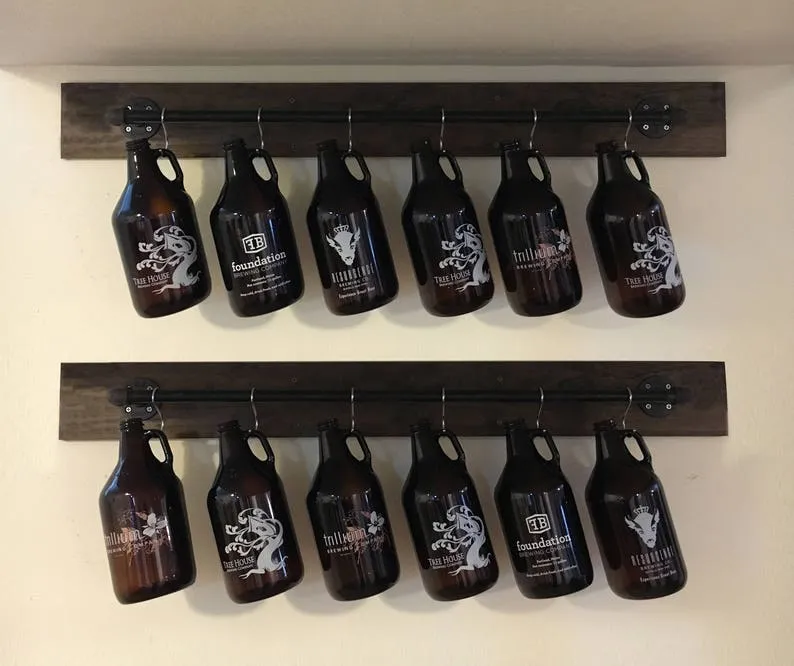
Walk into enough taprooms these days and you'll notice something missing. Where rows of branded 64-ounce glass jugs once lined the shelves behind the bar — screen-printed logos, hand-numbered runs, the occasional hand-painted seasonal — there's now a wall of canned four-packs and a crowler machine humming in the corner. Nobody's making a big announcement about it. There's no farewell ceremony. The growlers just... stop showing up.
It's a quiet shift, but it's real, and it's accelerating. And if you're the kind of person who's built a dedicated shelf for your collection, or who's driven forty-five minutes on a Saturday morning just to snag a fresh fill of something special, you've probably already felt it.
The Business Case Against the Jug
Let's be honest about what's driving this. Running a growler program isn't free. Breweries have to stock the vessels, clean and inspect returned containers, maintain fill equipment, and — in many states — navigate a patchwork of regulations that can make the whole operation more headache than it's worth. When a small operation is already stretched thin on staff and square footage, something has to give.
Crowlers — those 32-ounce aluminum cans that get sealed on-site — have become the path of least resistance for a lot of taprooms. They're portable, they don't require a returned vessel, and they have a shelf life that makes customers a lot more forgiving about the drive home. Canned releases, meanwhile, have gone from a novelty to a cornerstone of how most craft breweries move volume. You can stock a distributor, ship across state lines (where laws allow), and build brand recognition without ever filling a single glass jug.
For a brewery trying to grow beyond its zip code, the economics aren't subtle.
What Gets Lost in the Trade-Off
Here's the thing, though: the growler was never just a container. It was a ritual.
There's something specific about walking into a taproom with an empty vessel, handing it across the bar, and watching it come back full and cold and sealed. It's participatory in a way that grabbing a four-pack off a shelf just isn't. You made a small trip. You had a conversation. You made a choice about what was worth carrying home. The growler was a physical commitment to drinking local, and the breweries that leaned into that culture — the ones with loyalty stamps, fill punch cards, anniversary vessels, and seasonal artwork — built something genuinely hard to replicate with a can.
Collectors understood this intuitively. A well-designed brewery growler isn't just a souvenir. It's documentation. It marks a moment in a brewery's history, a particular era of branding, a collaboration that only happened once. When a brewery closes or rebrands, those old vessels become primary sources. Some of the most sought-after pieces in serious collections are from operations that no longer exist — jugs from defunct taprooms, pre-acquisition branding, early-run screen prints with color variations that never got corrected.
When breweries stop making new growlers, that pipeline of future collectibles dries up. And when they stop accepting fills on old ones, the vessels lose part of their living function. They become pure artifact.
The Crowler Compromise
To be fair, not every brewery walking away from the traditional growler program is abandoning the spirit of it. A lot of them are genuinely trying to find a middle ground.
Crowler culture has developed its own aesthetic logic. Some taprooms have invested in custom printing for their crowler cans — limited artwork, seasonal designs, the occasional collab label that functions as a mini-collectible in its own right. It's not the same as a hand-numbered ceramic jug, but it's not nothing either. For the drinker who just wants something fresh to take to a friend's cookout, the crowler makes a lot of sense.
There are also breweries that have narrowed their growler programs rather than eliminating them entirely — keeping a small selection of premium vessels for special releases or loyalty customers while shifting everyday fills to crowlers. It's a tiered approach that acknowledges both the operational realities and the cultural weight of the format.
The Collectors Are Paying Attention
Spend any time in the growler collector community — on forums, in Facebook groups, at the occasional beer festival swap table — and you'll hear the same sentiment repeated in different ways: we saw this coming, and we're not happy about it.
The secondary market for discontinued brewery vessels has tightened noticeably over the past few years. Pieces that would've moved for twenty or thirty dollars a few years back are now fetching two or three times that, particularly for breweries that have since closed or undergone major rebrands. The scarcity that was always latent in limited-run growlers has become more acute as the overall supply of new collectible vessels shrinks.
Some collectors have started treating active growler programs the way vinyl enthusiasts treat small-pressing record stores — as something worth supporting specifically because it might not be there next year. They're filling more intentionally, buying vessel designs they might have passed on before, and paying closer attention to which breweries are still committed to the format.
What It Means for the Culture Long-Term
The refillable revolution that this site has followed for years was always built on a simple premise: that bringing your own vessel, supporting a local brewery, and drinking something fresh and regional was a better way to consume beer. That premise hasn't expired just because the format is shifting.
But the growler was more than a delivery mechanism. It was a symbol — a shorthand for a set of values about locality, craft, and the relationship between a brewery and its community. When that symbol starts disappearing from taproom shelves, something cultural gets quieter, even if the beer itself remains excellent.
The breweries that are holding the line — the ones still filling glass jugs, still releasing seasonal vessels, still treating the refillable format as a core part of their identity — deserve recognition for that. It's not the easy choice anymore. In a market where cans dominate shelf space and crowlers handle walk-in traffic, choosing to maintain a full growler program is a statement.
For collectors, the message is clear: fill up while you can, and hold onto what you've got. The graveyard is getting bigger, but the pieces worth saving are worth more than ever.