Cracked, Chipped, and Cast Aside: The Secret Afterlife of Growlers That Never Made It Out the Door

Walk into the back room of almost any working craft brewery in America and you'll find it — the pile. Sometimes it's a milk crate shoved under a utility shelf. Sometimes it's a dedicated bin near the loading dock. At a few especially organized operations, it's a labeled rack with columns sorted by damage type. Whatever form it takes, every brewery accumulates a collection of growlers that, for one reason or another, never made it into a customer's hands.
We're talking about the chipped-lip 64-ouncers. The fills that went flat before the cap even cooled. The hand-etched jugs that came back cracked from a road trip. The limited-edition vessels that arrived from the manufacturer with hairline fractures nobody noticed until the first pressurized fill split them open like a bad joke.
These are the rejects. The growler graveyard, as more than a few taproom managers have called it with a wry smile. And what breweries do with them — that's a story worth telling.
Why Growlers Get Rejected in the First Place
Before we get to the afterlife, it helps to understand what kills a growler's chances in the first place. Quality control at a craft brewery isn't just about what's inside the vessel — the vessel itself has to pass muster.
"We inspect every growler before it goes out," says Marcus Teel, taproom manager at a mid-sized brewery in Asheville, North Carolina. "Chips on the rim are an automatic pull. If that edge isn't smooth and even, you're not getting a proper seal, and you're definitely not getting a proper fill. The beer loses carbonation almost immediately."
Beyond rim damage, breweries flag vessels with internal residue that survived cleaning, stress fractures from repeated thermal cycling, labels that have peeled and gummed up the glass, and — in the case of fills rather than vessels — pours that came out oxidized, over-foamed, or just plain off. A bad fill isn't always the growler's fault, but it still ends up in the pile.
At larger operations, the rejection rate can be surprisingly high during busy seasons. One head brewer in Portland, Oregon, estimated that between 8 and 12 percent of fills during peak summer weekends involve some kind of issue — whether that's caught before the cap goes on or flagged by a customer who comes back the next day with a flat pour and a disappointed look.
The Art of the Second Chance
Here's where things get genuinely interesting. A damaged growler isn't automatically trash — not in a community that takes sustainability as seriously as the craft beer world does.
Across the country, breweries have developed creative, sometimes surprisingly touching programs for giving these vessels a second life. A handful of taprooms in the Pacific Northwest have partnered with local artists and art schools to donate structurally compromised but visually intact growlers as canvases. Ceramics and glass art programs use them for decoupage projects, mosaic work, and mixed-media sculpture. A brewery in Denver has a running display of customer-submitted artwork made from retired vessels, rotating the pieces on a wall near the taproom entrance.
"We started calling it the Gallery of Second Pours," laughs the brewery's marketing coordinator. "It's become this thing people specifically come in to see. Some of those pieces are genuinely beautiful."
Other breweries have taken a more utilitarian approach. Growlers that fail the rim inspection but are otherwise structurally sound get repurposed as planters, both in the brewery's own outdoor seating area and through donations to community garden programs. A few taprooms in the Midwest have partnered with urban farming cooperatives, sending rejected glass by the crate to operations that use them as seed-starting vessels in the early spring.
The Donation Circuit
Not every second life is artistic or agricultural. Some breweries have built quiet but meaningful donation pipelines that most customers never hear about.
Homebrewing clubs are frequent beneficiaries. A growler that can't hold a proper commercial fill under CO2 pressure can still work perfectly well for a homebrewer transporting a batch of stout to a club meeting. Several brewery taprooms have standing arrangements with local homebrew supply shops to pass along rejected vessels at no cost, keeping them out of the recycling stream while supporting the enthusiast community that feeds directly into craft beer culture.
"These folks are our future customers, our future brewers," says one taproom owner in Austin, Texas. "Sending them a few dozen growlers we can't use anymore feels like the right thing to do. It's not charity — it's community."
Food banks and community organizations have also entered the picture in unexpected ways. While a cracked jug obviously can't hold liquid, some community kitchens and resource centers have found uses for intact but fill-rejected vessels as dry goods storage, accepting donations through brewery-organized drives.
When the Damage Is the Point
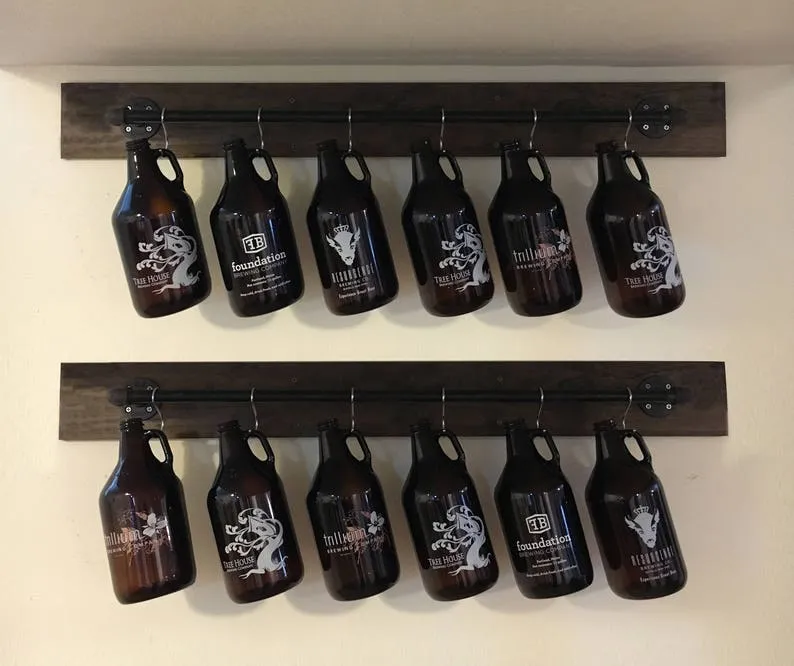
There's a niche but growing movement among craft beer enthusiasts that actually seeks out the damaged and the discarded — not for beer, but for display. Collector communities, particularly those already obsessed with vintage and discontinued brewery vessels, have started treating visibly imperfect growlers as objects of interest rather than embarrassment.
A chipped jug from a brewery that closed during the pandemic carries its damage like a scar — evidence of a life lived, of hands that held it, of a taproom that no longer exists. Some collectors argue these imperfections make the object more honest, more human.
"A perfect growler on a shelf is nice," one collector in Chicago told us. "But a dented one from a brewery that's gone? That tells a story."
What the Pile Tells Us
Spend enough time talking to brewery staff about their reject bins and a pattern emerges that's bigger than logistics or sustainability metrics. The way a brewery handles its damaged goods — the care taken, the creativity applied, the community considered — reflects something genuine about its values.
The breweries that have built thoughtful programs around their rejects aren't doing it for the press. Most of them had to be asked twice before they'd even talk about it. They're doing it because throwing a growler in a dumpster feels wrong to people who got into this industry because they love making something worth drinking and worth sharing.
The growler graveyard, it turns out, isn't really a graveyard at all. It's more like a waiting room — full of vessels that just need someone to figure out what they're good for next.
And in the craft beer world, that kind of patience and creativity is about as on-brand as it gets.