Tap, Toss, Transform: The Breweries Turning Surplus Growlers Into Neighborhood Landmarks
Every brewery has a corner, a closet, or a back shelf that tells a quiet story of miscalculation. Maybe the custom label run came back wrong. Maybe a seasonal collaboration never quite caught on. Maybe a batch of 64-ouncers sat through two full years without a single taker. Whatever the reason, surplus growlers are one of the most persistent headaches in small brewery operations — and for a long time, the answer was pretty uninspiring: discount them, donate them, or quietly toss them.
But a growing number of independent breweries across the US are flipping that script in the most unexpected way possible. Instead of writing off dead stock as a loss, they're handing it over to local artists, community gardens, school programs, and neighborhood nonprofits — and watching something genuinely beautiful happen.
Glass That Was Going Nowhere
The numbers behind surplus growler inventory are rarely talked about publicly, but anyone who's spent time behind a taproom counter knows the situation is real. Custom growlers — especially ones tied to limited releases, old branding, or discontinued collaborations — can pile up fast. Reordering minimums from glassware suppliers often push small breweries into quantities that outpace demand, and the result is a stockroom problem that compounds quietly over time.
For most operations, the math has always pointed toward markdown bins and wholesale clearance. But a handful of brewers started noticing something: these vessels are actually kind of gorgeous. Heavy glass, embossed logos, hand-painted labels, unusual shapes. Stuff that deserves better than a dumpster.
"We had about 300 growlers from a label we retired two years ago," says one Midwest taproom manager who asked to stay anonymous because the brewery's new branding campaign is still in progress. "They were just sitting there. Beautiful bottles, honestly. It felt wrong to trash them. So we reached out to a local art collective and basically said — here, do something with these."
What happened next became the talk of the neighborhood.
From Storage Room to Street-Level Gallery
The project that resulted from that Midwest conversation turned into a sidewalk installation outside the brewery: a mosaic wall built from growler bottoms, each one catching light differently depending on the time of day. Locals started stopping to photograph it. A regional lifestyle blog picked it up. The brewery's Instagram following doubled in six weeks.
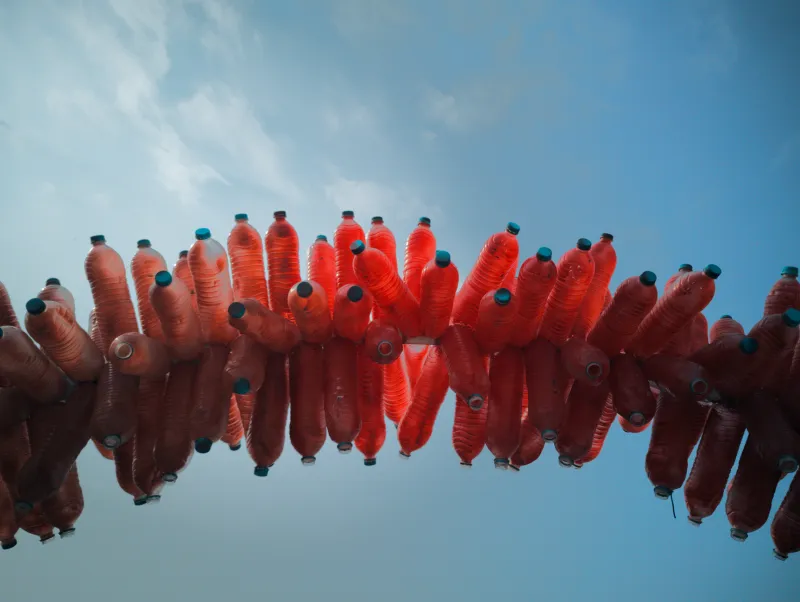
That kind of outcome is becoming less of an anomaly and more of a playbook. In Portland, Oregon, a small craft operation partnered with a community garden to use retired growlers as planters along a public walkway — each one filled with soil and trailing herbs, arranged by a local landscape artist who works primarily with reclaimed materials. In Austin, a brewery donated a run of mismatched growlers to a high school ceramics and sculpture class, where students used them as molds and armatures for a semester-long installation project that eventually went on display at a city arts festival.
These aren't marketing stunts dressed up as charity. Most of the breweries involved describe the process as genuinely organic — a problem in the back of the house that found an unexpected solution in the community out front.
Why It Works Beyond the Instagram Moment
There's real substance underneath the aesthetics here. Craft breweries, especially independent ones operating in competitive urban markets, live and die by neighborhood goodwill. The taproom isn't just a sales floor — it's a community gathering space, a local institution, sometimes the anchor of an entire block. Anything that deepens that relationship has tangible value.
Donating surplus growlers to a community art project does something that a discount bin never could: it keeps the brewery's name and logo visible in a context that feels creative and generous rather than transactional. A growler planted with lavender in a neighborhood garden isn't a sales pitch. It's a conversation starter. It says something about what a brewery values beyond the pour.
There's also an environmental dimension that resonates strongly with the craft beer crowd. Glass is infinitely recyclable in theory, but in practice, the recycling infrastructure for specialty glass in many US cities is inconsistent at best. Repurposing growlers into art or garden features keeps them out of the waste stream entirely — something that genuinely matters to a customer base that tends to care about sustainability.
The Charitable Angle
Not every surplus growler ends up in an art installation. Some breweries are taking a more direct philanthropic route, partnering with organizations that can put the vessels to practical use.
Food banks and community kitchens in several cities have started accepting clean, intact growlers for use in community events and bulk beverage distribution. Habitat for Humanity ReStores in a few markets have begun accepting specialty glass as decorative resale items. One East Coast brewery runs an annual "Growler Giveaway" tied to a local food pantry fundraiser — for every can of food donated, a visitor gets to take home a retired growler, no fill required.
The charitable angle also gives breweries a way to handle the most awkward category of surplus: growlers tied to discontinued collaborations or rebranded identities. These can't easily be discounted or resold without creating confusion, but they're perfectly suited for donation contexts where the branding history is irrelevant and the glass itself is the point.
What Collectors Are Saying
Interestingly, the growler collecting community — a passionate and surprisingly large subculture within craft beer culture — has mixed feelings about brewery art projects. Some collectors see repurposed growlers as vessels lost to history, especially when they involve drilling holes for drainage or cutting glass for mosaic work. Others argue that any outcome beats a landfill, and that a growler permanently installed in a neighborhood mural is, in its own way, preserved.
The debate is a reminder that these objects carry meaning well beyond their function. A growler isn't just a container. For a lot of people in the craft beer world, it's a record of a place, a moment, a relationship with a local brewery. When a surplus stock gets transformed into something the neighborhood can actually see and interact with, that meaning doesn't disappear — it just takes a different shape.
A Model Worth Spreading
What's striking about the breweries doing this well is how low-stakes the entry point is. You don't need a big budget or a dedicated marketing team. You need a box of growlers you weren't going to sell anyway and a phone call to a local artist, school, or nonprofit. The investment is minimal. The return — in goodwill, visibility, and genuine community connection — tends to be anything but.
For breweries looking to deepen their local roots without spending a lot of money, the answer might literally be sitting in the back of the stockroom collecting dust. Sometimes the best community project is the one that starts with a problem nobody knew how to solve.
Fill up. Drink local. And maybe hang a few growlers on the garden fence while you're at it.