Stranded in Glass: The Quiet Crisis of Growlers That Never Came Home
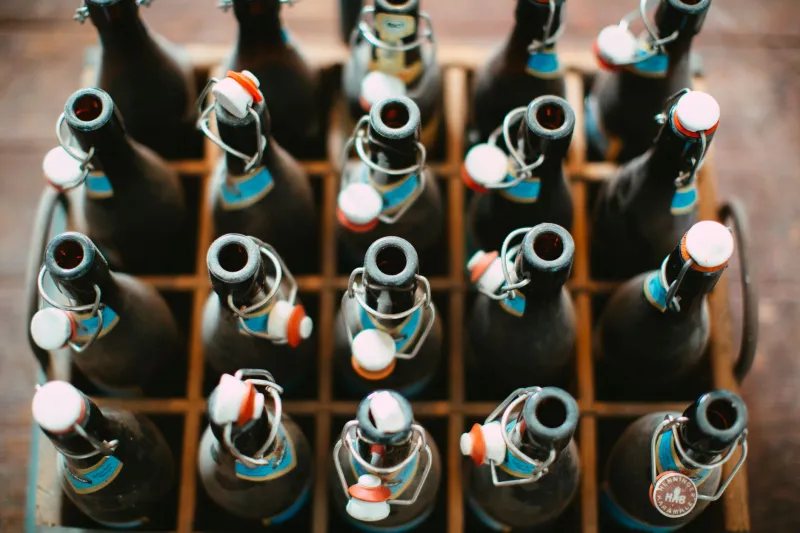
Somewhere in your house — maybe on a shelf in the garage, maybe tucked behind the recycling bin, maybe still sitting on the passenger seat floor of your truck — there's probably a growler you meant to return. You just never got around to it.
Multiply that by a few hundred million craft beer drinkers across the United States, and you start to understand the scale of what some in the industry are quietly calling a glass crisis.
The Numbers Nobody Wants to Talk About
There's no single federal agency tracking abandoned growler data. That's part of what makes this problem so slippery. But conversations with brewery owners from Vermont to Oregon tell a consistent story: return rates on standard 64-ounce glass growlers have dropped sharply over the last decade, and the trend isn't reversing.
Some smaller operations report return rates as low as 20 to 30 percent. A few larger regional chains — particularly those that expanded quickly during the 2015–2019 craft beer boom — admit to warehousing tens of thousands of unreturned vessels with no clear plan for what comes next. One Colorado taproom manager, who asked not to be named because the numbers were "embarrassing," told us his storage room looks like "a glass recycling center that gave up."
The Glass Packaging Institute estimates that roughly 80 percent of glass in the U.S. is technically recyclable. The operative word is technically. Thick-walled amber growler glass — the kind engineered to preserve carbonation and block UV light — doesn't always play nicely with standard municipal recycling streams. Many facilities reject it outright, or downgrade it to aggregate fill. The beloved vessel you bought for fifteen bucks ends up as road base.
Regional Fault Lines
The crisis isn't evenly distributed. States with strong bottle deposit laws — Michigan, Oregon, Vermont, and California among them — tend to see higher return rates across all beverage containers, and growlers benefit from that cultural infrastructure even when they're not explicitly included in deposit programs.
But in states without those systems — think Texas, Florida, and much of the Southeast — the incentive to bring a growler back is almost entirely social. And social pressure, it turns out, is a weak substitute for a fifty-cent deposit.
Urban taprooms also fare better than rural ones. When a brewery is embedded in a walkable neighborhood and customers visit regularly, the friction of returning a vessel is low. When your nearest fill station is a forty-five-minute drive, that growler sits in the mudroom indefinitely.
"We've done everything right from an education standpoint," says Dana Whitfield, co-owner of a small production brewery in rural Tennessee. "We put the return policy on the receipt, we put it on the growler itself, we remind people at the register. And we still get maybe one in four back."
The Souvenir Problem
Here's the uncomfortable truth that most breweries are too polite to say out loud: a lot of drinkers want to keep the growler. The craft beer industry spent years competing on vessel aesthetics — screen-printed logos, embossed glass, limited-edition colorways — and it worked. Drinkers started treating growlers like collectibles.
Which is great for brand awareness. Not so great for the circular economy.
Environmental advocate and zero-waste consultant Rachel Okonkwo, who works with food and beverage businesses in the mid-Atlantic region, puts it plainly. "You've created an object that's beautiful enough to display and sturdy enough to last decades. Then you're surprised people don't treat it like a rental car."
Okonkwo points out that the marketing language around growlers — words like heirloom, keepsake, collector's item — actively undermines return behavior. "You can't simultaneously tell someone this is a treasure and also expect them to hand it back."
What Breweries Are Trying
Some operations are getting creative. A handful of Pacific Northwest breweries have experimented with meaningful deposit structures — not the token dollar or two that barely registers, but genuine five- to ten-dollar deposits that actually change behavior. Early results are promising, though the model requires buy-in at the point of sale that not every taproom staff member is equipped to deliver consistently.
Others are pivoting away from glass entirely, leaning into stainless steel growlers and 32-ounce crowler cans as their primary take-home formats. Stainless has its own environmental footprint — the production process is energy-intensive — but drinkers tend to hold onto metal vessels longer and use them more actively, which improves the lifecycle math.
A few breweries in the Midwest have partnered with local glassblowing studios to repurpose cracked or cosmetically damaged growlers into decorative pieces, effectively turning the waste stream into a revenue stream. It's small-scale and labor-intensive, but it keeps glass out of the landfill and creates a story worth telling.
Then there's the peer accountability angle. Some taprooms have started public "bring it back" boards — essentially a running tally of returned vessels posted near the fill station. It's low-tech, slightly gamified, and apparently effective. One Minneapolis brewery reported a 15 percent uptick in returns after posting their monthly numbers publicly.
What You Can Actually Do
Let's be honest: the structural fixes have to come from breweries, policymakers, and industry associations. Individual consumer behavior alone won't solve a problem this embedded.
But that doesn't mean you're off the hook entirely.
If you've got growlers gathering dust at home, most breweries will accept them back even without a formal deposit program — they can sanitize and reuse them or at minimum route them through proper glass recycling channels. Call ahead and ask. You might be surprised.
If you genuinely want to keep a vessel as a keepsake, be intentional about it. Buy the limited-edition commemorative growler that was designed to be a collectible. Don't accidentally turn a standard fill vessel into a shelf ornament because you never got around to returning it.
And if your local brewery doesn't have a return policy at all, ask them why. That question, asked often enough, tends to generate action.
The Bigger Picture
Growler culture is one of the genuinely good things about the craft beer movement. The refillable model, done right, is more sustainable than cans, more economical than six-packs, and more communal than anything you'll find in a big-box liquor store. The ritual of the fill — walking into a taproom, chatting with the person behind the bar, walking out with something made locally — is worth protecting.
But rituals require maintenance. The growler only works as a sustainable format if it actually circulates. A vessel that makes one trip and then retires to a garage shelf is just an expensive single-use container with better aesthetics.
The graveyard is real. The question is whether the industry — and the drinkers who love it — care enough to do something about it before the numbers get worse.