Fill Me In: The Quirky, Beloved Growler Traditions That Make Local Breweries Unforgettable
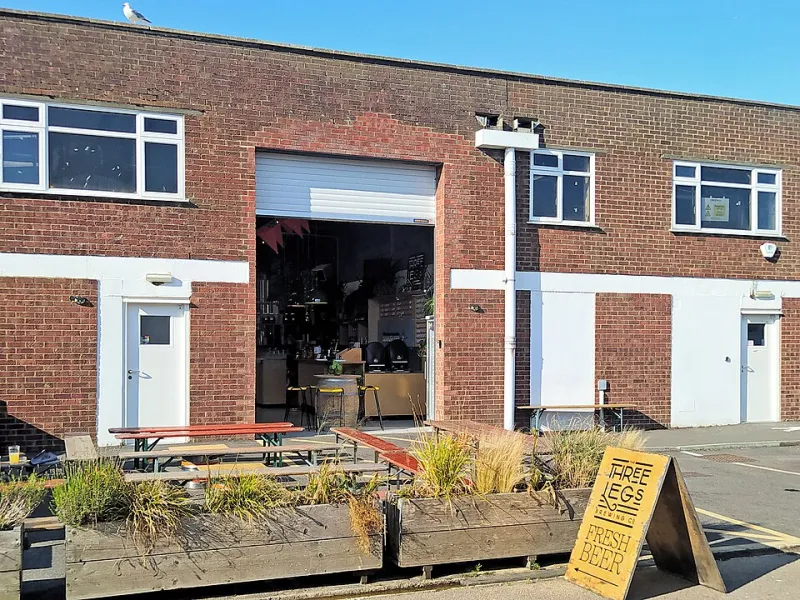
Photo: Alexis Markwick, CC0, via Wikimedia Commons
A growler fill is, on paper, a pretty straightforward transaction. You hand over a container, someone fills it with beer, you pay, you leave. Thirty seconds, maybe a minute if there's a good foam head to wait on. But spend enough time visiting independent breweries across America and you start to notice something: the fill is rarely just the fill.
Somewhere between the tap and the cap, a lot of breweries have built little rituals—some intentional, some organic, some so deeply woven into the fabric of the place that regulars would riot if they changed. We went looking for those traditions, and what we found was a portrait of craft beer culture at its most human.
The Blessing of the Jug (Asheville, NC)
One of the more theatrical growler traditions in the Southeast belongs to a small operation in Asheville, a city that takes its beer culture seriously enough that the local tourism board basically leads with it. At this particular taproom—which declined to be named but whose regulars will absolutely know who they are—every single growler fill is "blessed" by a ceramic garden gnome named Gerald who lives on a shelf directly above the fill station.
The ritual is simple: before handing the filled growler to the customer, the bartender holds it up toward Gerald for exactly three seconds. That's it. But ask anyone who's been going there for years and they'll tell you with complete sincerity that skipping the blessing feels wrong. One regular described it as "the difference between a good beer night and a great one." Gerald has been on that shelf for over a decade, survived two taproom renovations, and once went missing for four days (a dishwasher had moved him during a deep clean). The search party was, apparently, not entirely joking.
The Anniversary Pour (Portland, OR)
Portland's craft beer scene is so dense that standing out requires something beyond just excellent beer. One North Portland brewery has built a beloved annual tradition around its founding anniversary: on the exact date each year, the first 20 growler customers of the day receive their fill from a special tap that's been ceremonially "unlocked" at opening time with an old skeleton key mounted on the wall.
The key belonged to the original building's previous tenant—a hardware store—and the brewer found it during renovation. The anniversary beer is always a one-off collaboration with another local brewery, and the key ceremony has become a genuine community event. People line up before opening. There's a sign-in sheet. The 20th person in line gets a round of applause from the crowd. It's the kind of thing that sounds precious until you're there and realize everyone is having the time of their life at 11 a.m. on a Tuesday.
The Name on the Jug (Marfa, TX)
Out in Marfa—yes, that Marfa, the tiny art-world outpost in far West Texas—a small brewery has developed a tradition that's part practical, part community board. When a regular customer fills a growler, their name gets written on a chalkboard behind the bar next to the style they chose. It stays up until they come back.
On any given day, that board is a social map of the town's beer drinkers: local artists, ranch hands, the occasional celebrity who wandered in off the highway, a few tourists who made the pilgrimage specifically for this place. The owner says it started as a way to remember who was coming back, but it turned into something else—a public record of community membership. When someone's name has been up for too long, their friends start asking questions. It's also, quietly, how the staff learned that one of their regulars had moved away without saying goodbye. That name stayed up for three months before someone finally explained.
The Foam Tax (Burlington, VT)
Not every tradition is solemn. At a well-loved Burlington taproom, there's a running bit called the "foam tax"—if the bartender pours a fill that results in more than a finger of foam settling above the fill line, the customer gets to name the next seasonal beer. It's never actually been invoked, because the staff are exceptionally good at their jobs, but the rule is posted on a laminated card next to the fill station and every new customer gets it read to them.
The card has been updated twice over the years. The current version includes a footnote that reads: "Management reserves the right to veto names that are not printable on a family-friendly chalkboard. 'Foam Tax IPA' has been submitted 47 times and will not be approved." The whole thing costs nothing and generates more goodwill than any loyalty program they've ever tried.
The Growler Wall of Fame (Bend, OR)
Bend has more breweries per capita than almost anywhere else in the country, so the competition for loyalty is real. One operation near the Old Mill District has built something genuinely remarkable: a wall of framed photographs of customers with their growlers, arranged not by date but by the number of fills they've logged. At 50 fills, you get your photo on the wall. At 100, your name gets engraved on a tap handle that stays in rotation.
There are currently eleven tap handles on that wall bearing customer names. The oldest belongs to a retired schoolteacher who started coming in during the brewery's first month. She fills a 32-ounce ceramic growler with the same amber ale every single time, and the staff keeps a case of it on reserve under the bar for her visits. Her tap handle reads: "Margie's Amber. Reserved."
Why Any of This Matters
It would be easy to dismiss these rituals as marketing gimmicks—ways to manufacture loyalty in a crowded market. And sure, some of them probably started that way. But spend five minutes talking to the people who participate in them and that reading falls apart fast.
These traditions work because they do something a loyalty app or a punch card never can: they make a person feel like they belong to a specific place, with specific people, in a way that can't be replicated anywhere else. The growler is the vessel for the beer, yes. But it's also, in these places, the vessel for the relationship between a brewery and its community.
That's worth raising a glass to—whatever you fill it with, and however Gerald needs to bless it first.