Cold, Dark, and Fast: What Actually Happens to Your Growler Fill on the Way Home
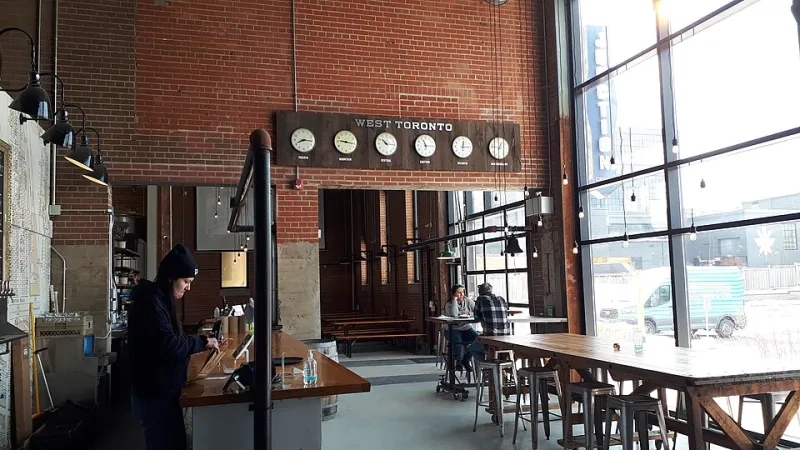
Photo: TheDigitel Beaufort from Beaufort, SC, USA, CC BY 2.0, via Wikimedia Commons
You just waited in a respectable Saturday line at your local brewery, chatted up the bartender about the new dry-hopped IPA, and walked out with a freshly filled 64-ounce growler tucked under your arm. Life is good. But here's the part nobody really talks about: the clock started the second that tap closed.
Beer is alive in a very real chemical sense, and the conditions between the brewery and your couch matter more than most people realize. This isn't about being precious or fussy—it's about protecting something a brewer spent weeks crafting. Let's break down what's actually happening inside that jug.
The Oxygen Problem Nobody Wants to Think About
Oxygen is the single biggest threat to a freshly filled growler, and it sneaks in at every opportunity. Even a well-sealed growler has a small headspace—that gap between the beer's surface and the cap—and that space is filled with air. Oxygen dissolved into beer triggers a cascade of chemical reactions called oxidation, and the results are unmistakable: a stale, papery, sometimes sherry-like flavor that brewers call "cardboard notes."
The chemistry here involves compounds called aldehydes, particularly trans-2-nonenal, which forms when fatty acids in the beer react with oxygen. At low concentrations it reads as cardboard. At higher levels, some tasters describe it as wet paper or even old crackers. None of those are flavors the brewer was going for.
When you pick up a growler fill, ask your brewery how they handle headspace. Some shops purge the container with CO2 before filling—this displaces oxygen and dramatically slows the oxidation clock. Others fill from the bottom up with a tube to minimize agitation and foaming, which also limits oxygen pickup. These small techniques make a measurable difference.
Light Is Not Your Beer's Friend
If you've ever left a beer sitting on a sunny picnic table and noticed it tasted a little funky afterward, you've experienced lightstruck beer—sometimes called "skunky" beer, though that term gets thrown around loosely. The actual culprit is a photochemical reaction involving iso-alpha acids, the compounds that give hops their bitterness. UV light breaks those molecules apart, and the resulting fragments combine with sulfur compounds in the beer to produce 3-methyl-2-butene-1-thiol, which is chemically related to the compound skunks spray.
Here's the thing: this reaction happens fast. Studies have shown that even a few minutes of direct sunlight can produce detectable lightstruck character in beer. Fluorescent lighting is less aggressive but still contributes over time. Brown glass offers the best protection among common bottle materials; green and clear glass offer almost none. Most ceramic and stainless steel growlers block light entirely, which is one of their real functional advantages beyond just looking cool on a shelf.
If you're transporting a glass growler, keep it in a bag or wrap it in something opaque. It sounds simple because it is—but most people don't bother.
Temperature: The Accelerator You Can Control
Heat doesn't just make beer warm; it actively accelerates every chemical reaction happening inside the container. The general rule in food science is that reaction rates roughly double with every 10°C (about 18°F) increase in temperature. For beer, that means a growler sitting in a hot car on a summer afternoon is aging at a dramatically faster rate than one riding home in an air-conditioned cooler.
Hoppy beers—particularly New England IPAs and West Coast IPAs—are especially vulnerable. The aromatic compounds from dry hopping, called terpenes and thiols, are volatile and temperature-sensitive. They don't just fade; they can transform into less pleasant aromatics. That gorgeous tropical fruit and pine character can shift toward something vegetal or even onion-like as those compounds degrade.
Malt-forward styles like stouts, porters, and barleywines are more forgiving, partly because their higher alcohol content offers some protection and partly because the flavor compounds that define them are more stable. But no beer benefits from heat.
The practical takeaway: always bring a cooler. Even a cheap foam one from a gas station is better than the back seat. If you're making a grocery run after your brewery stop, the growler goes in the car with you—not in a hot trunk.
The Window Is Smaller Than You Think
Most breweries, if they're being honest, will tell you a standard growler fill is best consumed within 24 to 48 hours of filling. Some styles push that window out—a high-ABV Belgian quad or a well-made imperial stout might hold up for several days under ideal conditions. But that fresh IPA you paid a premium for? It's living on borrowed time.
Once a growler is opened, the timeline collapses further. Carbonation escapes rapidly once the seal is broken, and oxygen floods in with every pour. A partially consumed growler left overnight loses significant carbonation and picks up flat, oxidized character quickly. The old trick of pressing plastic wrap against the surface before re-capping slows this slightly but doesn't stop it.
Pressurized growler systems—like those that use a CO2 cartridge to maintain pressure inside the vessel—do extend the post-opening window meaningfully. If you frequently find yourself not finishing a growler in one sitting, that technology is worth exploring.
Practical Rules for the Ride Home
None of this requires a chemistry degree to apply. A few habits will put you well ahead of the average growler carrier:
- Fill cold, stay cold. Ask for a fill from a well-chilled tap, and put the growler on ice or in a cooler immediately.
- Block the light. A paper bag, a tote, a jacket—anything opaque works.
- Go straight home. A growler is not a passenger you can leave in the car while you run errands.
- Drink it soon. Especially hoppy styles. Don't save it for the "right moment"—the right moment is now.
- Ask about CO2 purging. Breweries that do this are worth knowing about and worth supporting.
The growler is one of the most democratic vessels in craft beer culture—it's how a tap-only brewery can send its best stuff home with you. Treating that fill with a little scientific respect means you're actually tasting what the brewer made, not a degraded version of it. That's worth a cooler and a direct route home.