Garage Dreams, Taproom Realities: 5 Brewers Who Went from Homebrew Kits to Cult Favorites
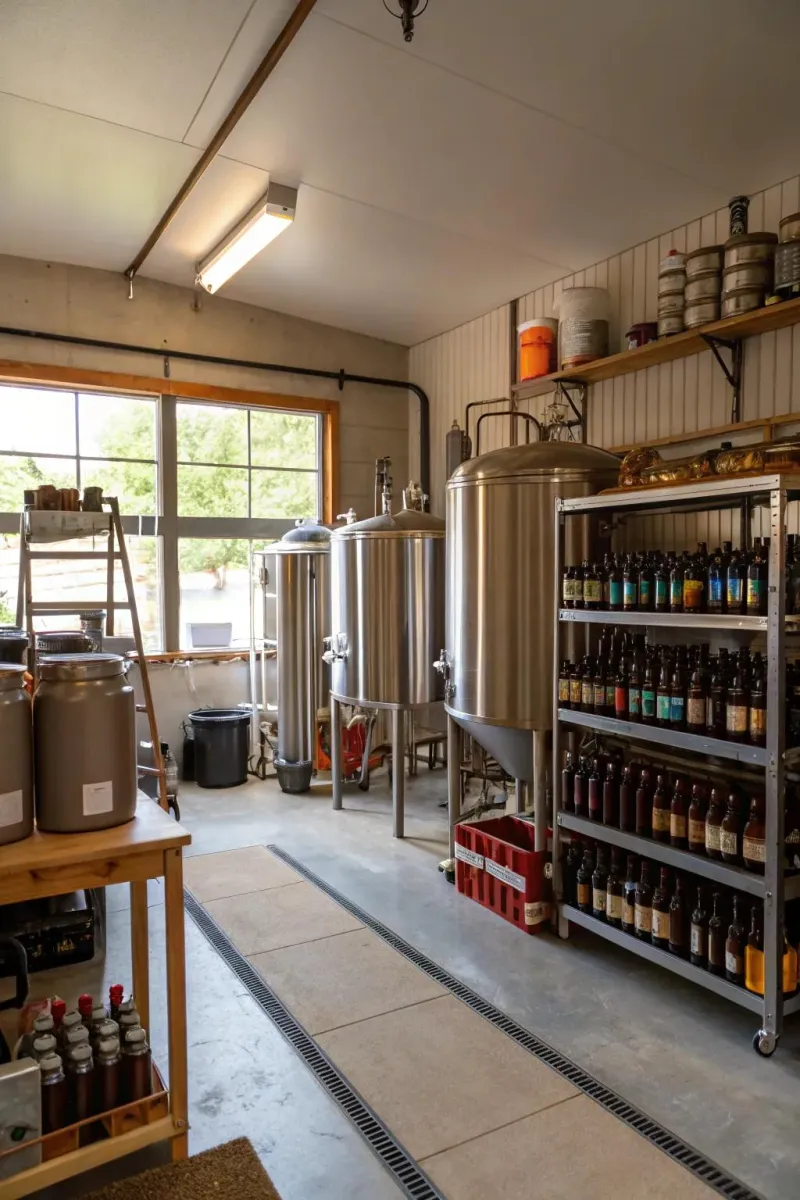
Photo: homebrewer craft beer garage brewing equipment taproom, via casolia.com
There's a particular kind of ambition that lives in the American garage. It's the same energy that built rock bands, tech startups, and small businesses that eventually outgrew their zip codes. Craft brewing is no different. Some of the country's most beloved independent breweries started with secondhand equipment, borrowed recipes, and a stubbornly optimistic brewer who refused to stop tweaking the formula.
We tracked down five of those brewers — people who went from homebrewing on weekends to running taprooms that have become genuine community anchors. Their paths weren't identical, but the through-line is consistent: obsession, patience, and an unshakeable belief that what they were making was worth sharing.
Marcus Webb — Founder, Ironwood Hollow Brewing (Asheville, NC)
Marcus Webb didn't set out to open a brewery. He set out to impress his father-in-law, a man with notoriously high standards for a good stout. "I brewed my first batch in 2009 in the garage of our rental house," Marcus told us. "It was terrible. But my father-in-law said it had potential, and I took that way too seriously."
Six years, hundreds of batches, and one Small Business Administration loan later, Ironwood Hollow Brewing opened its doors in West Asheville. The taproom is small by design — Marcus wanted it to feel like someone's living room — and the growler fills have become a neighborhood ritual.
Try in a growler: His signature Ironwood Dark Mild is the one that started it all. Low ABV, deeply complex, and surprisingly food-friendly. It pairs beautifully with smoked pork or aged cheddar and holds up well in a sealed growler for a solid 36 hours.
His advice for homebrewers: "Stop trying to clone other beers and start trying to make something only you would make. The market doesn't need another West Coast IPA. It needs your weird idea."
Priya Anand — Founder, Copper Kettle & Co. (Portland, OR)
Priya Anand grew up watching her grandmother make fermented beverages in their family's kitchen in Chennai. When she moved to Portland in her late twenties, she discovered homebrewing culture and immediately recognized the connection. "Fermentation is fermentation," she says with a laugh. "The science doesn't care what country you're in."
She started brewing in her apartment — technically against her lease — before graduating to a proper garage setup after her first year. Her early beers were heavily influenced by Indian spice profiles: cardamom, coriander, dried mango. Portland's adventurous drinking culture embraced it immediately.
Copper Kettle & Co. now operates out of a converted auto shop in Northeast Portland, and Priya's spice-forward ales have developed a devoted following that extends well beyond the local craft beer community.
Try in a growler: Mango Cardamom Wit — bright, aromatic, and genuinely unlike anything else you'll find at a standard taproom. It's a warm-weather growler essential and pairs well with Thai food, grilled fish, or just a sunny afternoon on the porch.
Her advice for homebrewers: "Read everything, but then ignore most of it. Your palate is the final judge. If it tastes right to you, it's probably right."
Dave Kowalski — Founder, Rust Belt Republic Brewing (Cleveland, OH)
Dave Kowalski is a former auto mechanic who started homebrewing as a way to cope with a layoff in 2011. "I had time and I had a homebrew kit my brother gave me for Christmas," he says. "I figured I'd give it a shot. Cheaper than therapy."
What followed was four years of obsessive experimentation, a regional homebrew competition win in 2013, and eventually a crowdfunding campaign that raised $47,000 from Cleveland locals who believed in what Dave was building. Rust Belt Republic opened in 2016 and has since become one of the city's most beloved gathering spots.
The brewery leans hard into its working-class roots — no pretension, no flights served on fancy wooden paddles, just honest beer and a no-frills taproom that feels like a neighborhood bar should.
Try in a growler: Overtime Amber Ale — malt-forward, caramel-tinged, and built for drinking multiple pints without feeling like you've been hit by a freight train. It's the kind of beer that rewards repetition. Perfect alongside a Cleveland-style Polish Boy sandwich if you can manage it.
His advice for homebrewers: "Don't underestimate how much people want to support local. If your beer is good and your story is genuine, your community will show up."
Simone Fletcher — Founder, Wavecrest Brewing (San Diego, CA)
Simone Fletcher started homebrewing during graduate school as a way to stretch her budget. "Craft beer in San Diego was — and still is — everywhere, but it adds up fast when you're on a student stipend," she says. "Making my own seemed logical."
What started as economics became a passion, and eventually a career pivot that surprised everyone who knew her — including Simone herself. She left a career in marine biology to open Wavecrest Brewing in 2018, and the brewery's coastal identity runs through everything from the branding to the beer styles.
Her background in science shows in her brewing process: meticulous, data-driven, and always questioning. Wavecrest has won multiple awards at the San Diego International Beer Competition, and the taproom's growler program has become a point of pride.
Try in a growler: Bioluminescence Pale Ale — clean, tropical, and built around locally sourced citrus. It's a crushable everyday drinker that somehow still feels special. Pair with fish tacos. Obviously.
Her advice for homebrewers: "Treat every batch like an experiment. Document everything. Your notes from two years ago will save you more times than you'd expect."
Terrence "T-Bone" Booker — Founder, Junction House Brewing (Memphis, TN)
Terrence Booker got into homebrewing through his church's annual fundraiser — he was tasked with making root beer for the kids' table and accidentally became fascinated with fermentation. "I went down a rabbit hole and never came back up," he says.
Over the next decade, Terrence became a fixture in Memphis's small but passionate homebrewing community, mentoring newer brewers and entering (and frequently winning) regional competitions. Junction House Brewing opened in 2020 — right in the middle of a pandemic — and somehow survived through sheer community loyalty and a robust growler-to-go program that kept the lights on during the darkest months.
"The growler program saved us," Terrence says plainly. "People would drive across town to fill up. That meant everything."
Try in a growler: Delta Blues Smoked Porter — rich, smoky, and deeply Southern in character. It's the beer Terrence calls his "soul beer," and it pairs with Memphis BBQ in a way that feels almost cosmically correct. A full growler of this next to a rack of ribs is genuinely one of life's better moments.
His advice for homebrewers: "Share your beer constantly. Give it to neighbors, bring it to parties, let people tell you what they think. The feedback you get for free is worth more than any competition ribbon."
What These Stories Have in Common
Five different brewers, five different cities, five completely different paths — but the same underlying truth: craft brewing rewards persistence and punishes impatience. Every one of these founders spent years making beer for free before they made a dollar from it. Every one of them absorbed criticism, reworked recipes, and kept going anyway.
If you're homebrewing right now and wondering whether it's worth pursuing seriously, the answer from everyone on this list is the same: make better beer first. The business stuff can wait. The quality can't.
And when you finally do open that taproom? Start a growler program on day one. If Terrence Booker's story tells us anything, it just might be what keeps the whole thing alive.